
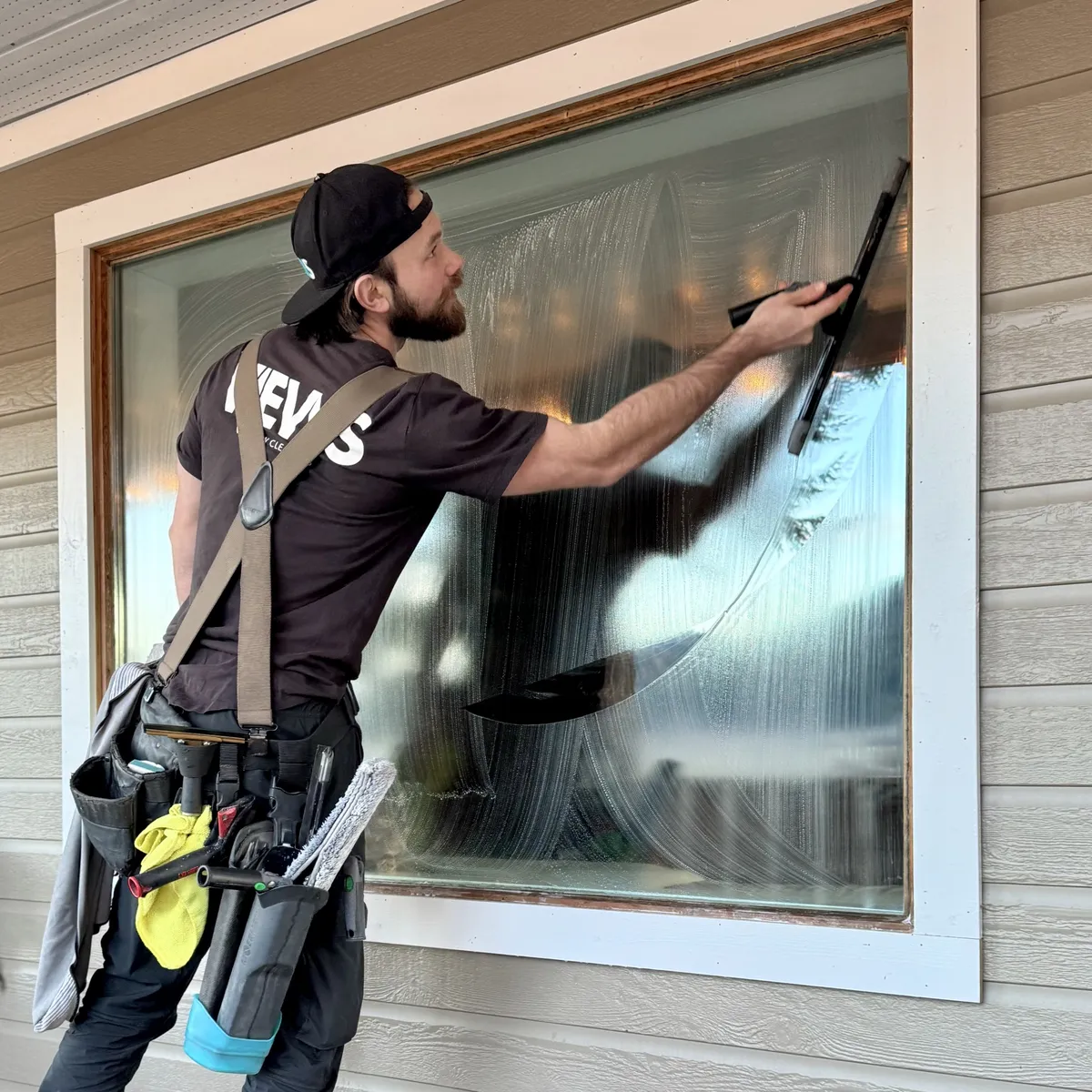
Customers often ask what secret solution makes professional windows look so good. The honest answer is wonderfully simple: soap and water do much of the work. The visible difference comes from technique, clean tools and a complete process.
The short answer
What you need to know
There is no magic bottle. A small amount of appropriate dish soap in clean water provides slip and helps lift ordinary soil. Professional results come from washing the entire pane, controlling the squeegee, detailing the edges and checking the glass from more than one angle.
At a glance
Six practical takeaways
- 01Use clean water and only enough soap to create glide.
- 02Wash the frame before debris can fall onto finished glass.
- 03Keep the squeegee rubber clean, sharp and consistently angled.
- 04Use lint-free cloths for edges—not the centre of the pane.
- 05Clean sills, tracks and screens when they are part of the scope.
- 06Inspect from inside and outside whenever access allows.
01 / 06
The simple solution
For routine residential glass, the goal of the cleaning solution is straightforward: loosen everyday dirt and give the squeegee enough glide to move smoothly. Too much soap can leave residue; too little can make the rubber chatter. Exact concentration changes with the water, weather and amount of buildup.
A fresh bucket matters. Once the water is carrying grit, pollen or construction dust, continuing to use it can move contamination from one pane to another. Professional cleaning is less about a secret ingredient and more about controlling every part of the process.
02 / 06
1. Clean the glass and frame
A strip washer applies the solution while controlled agitation lifts dust, fingerprints, bug marks and ordinary grime. Frames are addressed before the final squeegee pass so loose material does not tumble onto completed work.
Stubborn deposits are assessed rather than attacked blindly. Mineral scale, paint, silicone, adhesive and post-construction debris need different methods, and not every hard tool is appropriate for every glass surface.
03 / 06
2. Control the squeegee
The rubber should meet the glass at a reliable angle with relaxed, even pressure. Each pass needs to collect the solution without leaving a trail that dries into streaks. Clean rubber and an intentional starting edge make that easier.
Straight pulls and fanning can both work well. The best technique is the one the cleaner can control safely on that particular pane, at that height and in those conditions.
04 / 06
3. Detail the edges
A lint-free detailing cloth catches the narrow line of moisture a squeegee can leave beside a seal or frame. The cloth stays at the perimeter; rubbing the centre of finished glass can reintroduce haze or fibres.
Sills, ledges and accessible tracks are where a rushed job often reveals itself. Completing those areas makes the whole window feel cared for rather than merely wet and wiped.
05 / 06
4. Inspect in changing light
Glass can look perfect from one direction and show a small mark from another. Ryan checks completed work from multiple angles and, where practical, from both sides. Changing light is a better inspector than confidence.
This final pass also confirms that the area is tidy, screens are seated properly and nothing has been left behind.
06 / 06
Common DIY mistakes
Most frustrating results come from a handful of correctable habits: dirty water, too much product, worn rubber, direct sun drying the pane before it can be finished, or using a bath towel that leaves lint across the glass.
- Work in manageable sections when heat or sun speeds drying.
- Replace nicked or hardened squeegee rubber.
- Keep a separate clean cloth for detailing glass edges.
- Never trade safe ladder positioning for a few extra centimetres of reach.
- Ask a professional before scraping unknown glass or construction debris.
Clear answers
Common questions
What soap do professional window cleaners use?
Many professionals use a purpose-made solution or a small amount of suitable dish soap in clean water. Technique, water quality, tool condition and complete detailing matter more than a heavily concentrated product.
Why do my windows still look streaky?
Common causes include excess soap, dirty water, worn squeegee rubber, linty cloths and solution drying before it is removed. Marks can also be on the opposite side of the pane or between sealed panes.
Should I use newspaper or paper towel?
A clean squeegee and lint-free detailing cloth are more predictable. Paper products can shed fibres, move dirt around and require far more rubbing.
Can Views clean screens, sills and tracks too?
Yes. Scope varies by quote, so mention screens, tracks or any problem areas when you contact Ryan and they can be included clearly.